
Austin is a celebrated No-Kill community, and a bright light in American sheltering practices today. Through hard work and dedication, this city has seen live outcome rates rise as high as 93%. But with thousands of dogs and cats entering the shelter every month, too many savable animals are still being unnecessary killed. In a recent blog post, No Kill advocate Nathan Winograd wrote:
Austin, Texas, has the highest save rate of any urban community in the United States today. Despite over 20,000 impounds annually, Austin is on pace for a better than 90% save rates for dogs and cats this year, a monumental achievement and a beacon of hope for advocates in darker parts of the country. But it is certainly not No Kill from the standpoint of other species of animals and it continues to kill large, healthy, but “ill-mannered” dogs.
We introduced you to two such dogs in our last post, Defining Unadoptable. We asked the question:
Do one-time offenses such as growling at staff or other dogs indicate a dog that is hopelessly aggressive with a poor prognosis for rehabilitation?
Is Austin using the 10% cushion as an excuse to kill “ill-mannered” dogs that are otherwise healthy and adoptable, but maybe require extra effort? Let’s take a look at another TLAC dog that didn’t make it out alive. Her name was Lyra.
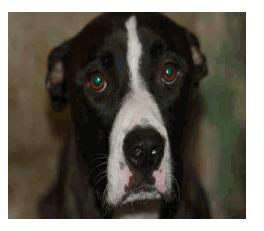
Lyra entered TLAC on June 13th, 2011 in the early afternoon. She was evaluated upon intake by two staff members, both noted no aggression and her level of fear as low and friendly behavior as high. She was emaciated and had recently given birth to a litter. She quickly garnered favor among the staff and her behavior report is filled with positive comments including:
Dog is very friendly to people and other dogs. Enjoys petting, gives kisses; SUPER friendly, gentle dog!
This dog seems housetrained. Pooped quickly after leaving kennel. She doesn’t seem to have any food guarding issues despite her obvious starvation. I gave her a bowl of wet food and took it away and then put my hand near her face. Very sweet.
A mere 6 days after she arrives at TLAC, a note is added to her record indicating she has become a staff favorite for 4 TLAC employees. The great comments continue to roll in, for six weeks (a long time for any dog to wait at the shelter), her behavior report is glowing.
Lyra is very housetrained, easy on the leash and very playful. Knows sit, seems social with other dogs and people and when it was time to go followed me to the gate and sat nicely to be leashed up. Very sweet dog!
Poor Lyra is very skinny and has had puppies. I hope she starts gaining weight soon. She is a very sweet girl who comes when she is called. She is gentle and likes belly rubs. She is also housebroken.
On July 29th the following comment is added to her behavior report:
Busted out of cage and rushed another dog being moved. Jumped on other dog and began biting back of other dogs neck. Took two people to break up. No serious injury to other dog. Request lock and/or possible move to more secure kennel.
It sounds like her kennel wasn’t secure. She had been at the shelter for 46 days, getting one at most two ten-minute breaks a day. She got out of her kennel and in her high stress environment, rushed at another dog. While the staff member notes that no serious injury occurred, the sad truth is that it only takes one incident like this for a dog like Lyra to be killed. The next day, a staff member adds this comment to her file:
while reviewing Lyra, a volunteer admitted that this dog’s reactivity to other dogs had been steadily escalating for some time; moving to RO for safety reasons.
RO stands for “rabies observation” and has historically only been used at TLAC for dogs that bite and break skin. It is an area of the shelter that neither volunteers nor customers can access, and the animals there are left in total isolation. They get no walks, no breaks, no human affection. Lately, TLAC seems to be employing this RO area of the shelter for any dog they deem unruly, removing them from the public eye and the care of volunteers. Perhaps they hope that these dogs will be forgotten in these lonely kennels.
Interestingly, this post refers to dog reactivity that has been steadily escalating. However, no specific incidents or dates or facts are included with this comment. We do not even know which volunteer admits to this supposed behavior. Remember, this is the same Lyra that, upon arrival is reported to have no aggression, that on June 19th is reported as a staff favorite and that for her first 46 days at the shelter receives nothing but glowing comments.
After this lock-up she receives only one more behavior comment, on August 11th. This is two days shy of 2 months at TLAC. She has been locked up in isolation for nearly two weeks with no exercise breaks. A staff member writes:
Took this dog into the pen to note his behavior, as going to the pen he was very reactive to most of the dogs that we went by. At some, he growled and bit the gate fence. He pulled and was hard to manage on a leash. I let him run around for a few minutes to try to get some energy out then had Greg introduce another dog on the other side of the fence. The dog we try to introduce was a very calm dog which I had been familiar with. This dog for the first 30 seconds was wagging his tail then stiffened up in a prey posterior then burst towards the other dog in an aggressive manner, growling and biting at the fence. I then chose not to bring the dog inside the pen to keep either animal from possible injury. As I took him back into his pen in ro, he pulled constantly towards other dogs that he was fixating on as he passed.
Reading this comment, and rereading this comment, its hard to imagine this is even Lyra the staff member is referring to. Lyra is a female dog, and a very obviously female dog because she arrived at the shelter still lactating (according to her vet records). Why does this comment refer to the dog as a he? Did the staff member put a comment for another, male dog in Lyra’s behavior record by accident? What was the purpose of trying to introduce these two dogs anyways? Was TLAC looking for an “aggressive” response to justify killing? Does this incident, conducted in a highly stressful shelter environment, with a dog that had been locked up for 11 days without any breaks or human contact indicate a truly aggressive dog that is too dangerous to even try to adopt?
Four days later, on August 15th, 2011, Lyra was killed. Her medical records list the reason as aggression. The same dog that came in the front door happy, friendly and affectionate (as her behavior record clearly indicates) went out the back door in a body bag.
For the 90+% of cats and dogs leaving TLAC for happy new homes, the system is working. But for the other animals, including Lyra, we have to ask whether we are doing enough. Lyra was never offered as a candidate for the adult foster program. Lyra was never taken on trail walks. Lyra was never evaluated by a certified behaviorist or taken to training classes. The day Lyra got out of her kennel, which was not properly secured, her world came crashing down. Sadly, she is not the only dog continuing to suffer this fate at TLAC.